
CREATIVE LEADERSHIP
Leading creative teams, managing priorities, and developing the processes needed to bring hundreds of products to market each year.
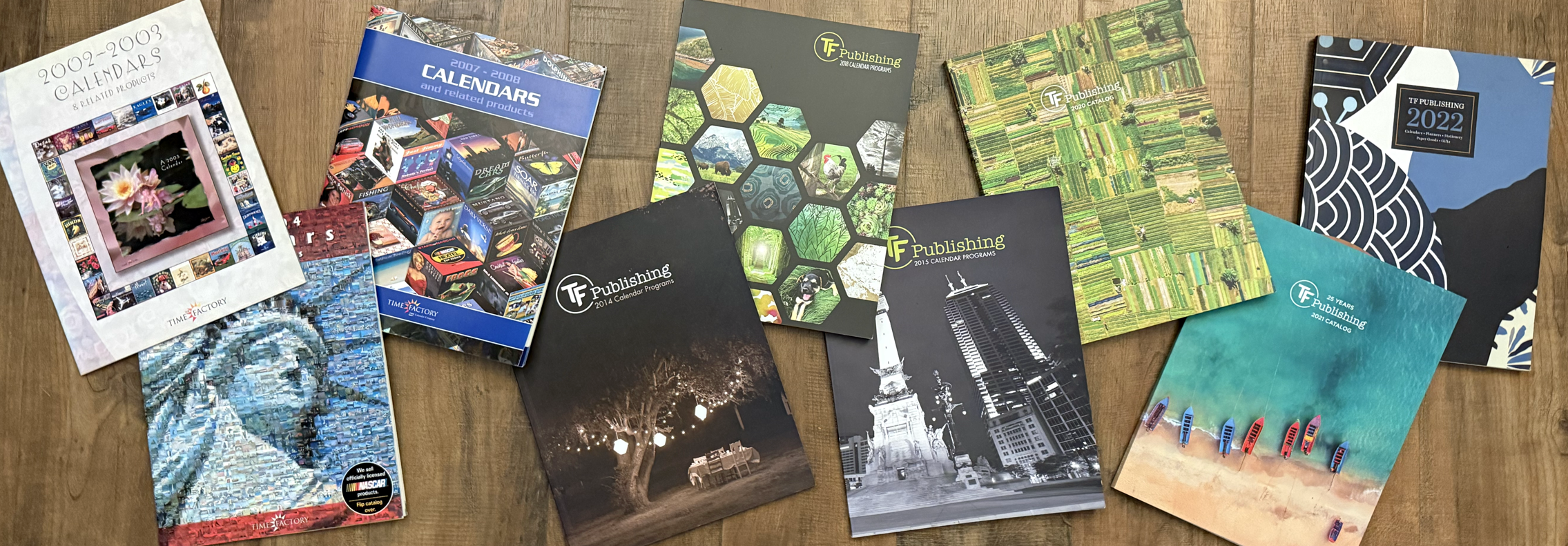
More than two decades of product catalogs representing hundreds of products developed annually across licensed and proprietary brands.
The Challenge
Keep hundreds of creative projects moving while maintaining quality, developing designers, and supporting the needs of the broader organization.
With product titles launching on overlapping schedules, leadership required more than assigning projects. Designers needed clear direction and priorities, ongoing feedback, access to the right resources, and support when projects became difficult—while Sales and other departments depended on Creative for materials needed to sell those products.
My Approach
Create clarity at the beginning, provide support throughout the process, and give designers room to take ownership of their work.
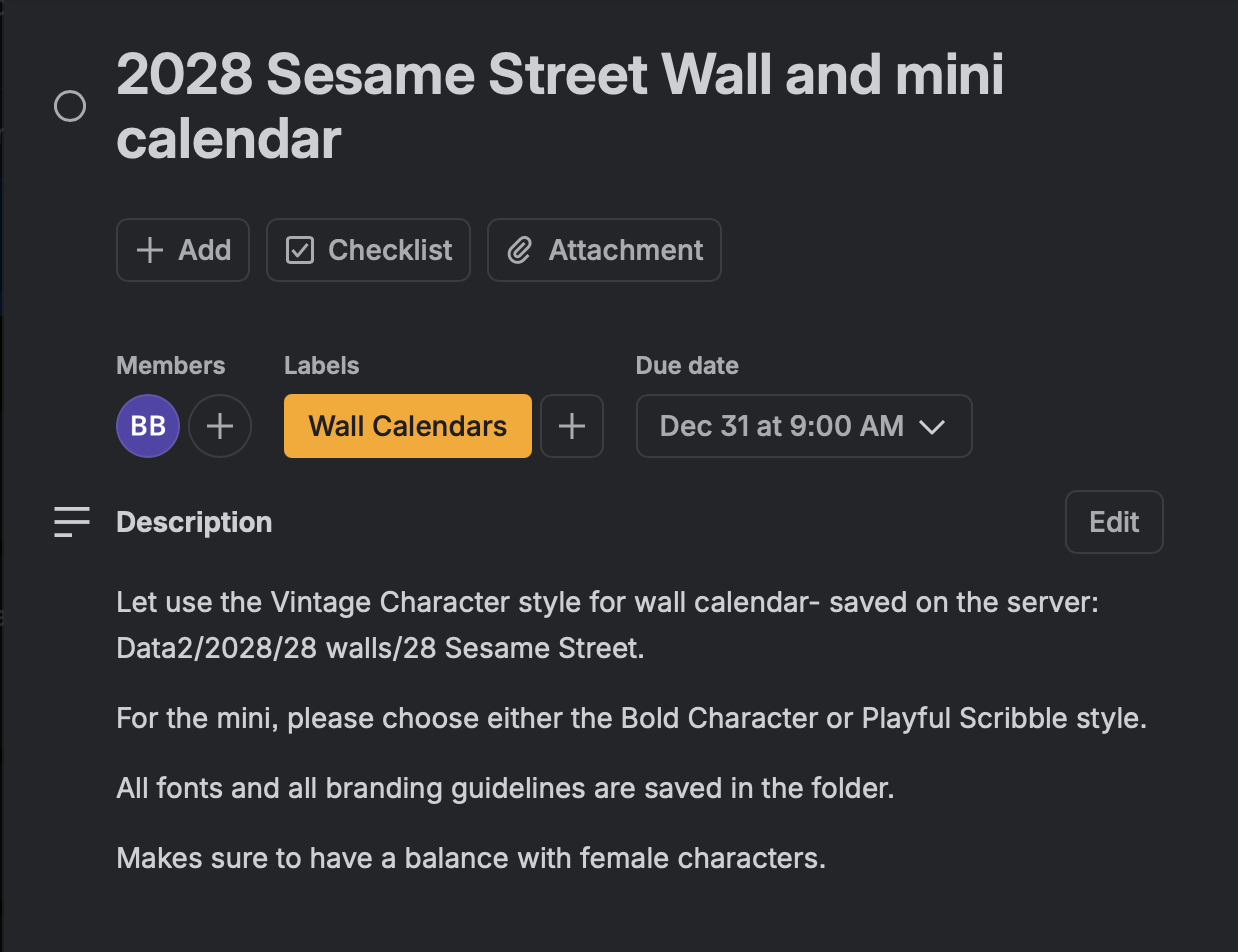
I tailored my leadership to the individual—providing more hands-on instruction for newer designers while giving experienced team members greater independence. Projects were assigned with individual strengths and interests in mind, supported by clear timelines, resources, feedback, and ongoing availability when help was needed.
01 — Develop the Team
Build capability through mentorship, increasing responsibility, and ongoing feedback.
New designers progressed from demonstration and guided practice to independent execution and greater project ownership. As their skills developed, I increased their responsibility and autonomy, while continuing to provide feedback, resources, and support when needed. I also incorporated peer review into the process, encouraging designers to share work, exchange ideas, and learn techniques and approaches from one another.
02 — Direct the Work
Balance priorities, individual strengths, and hundreds of active projects.
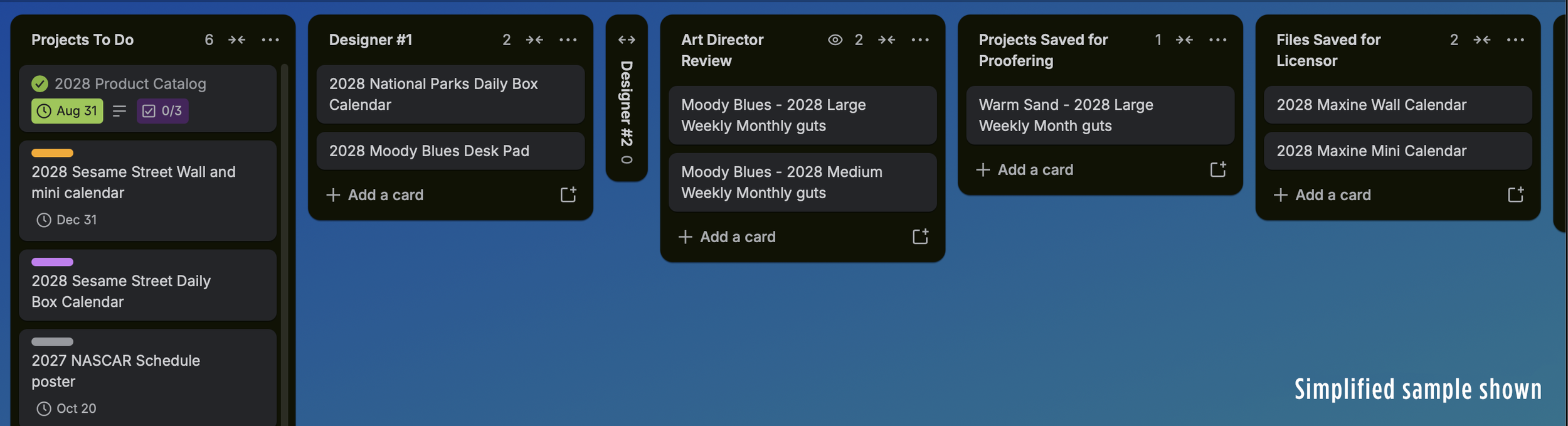
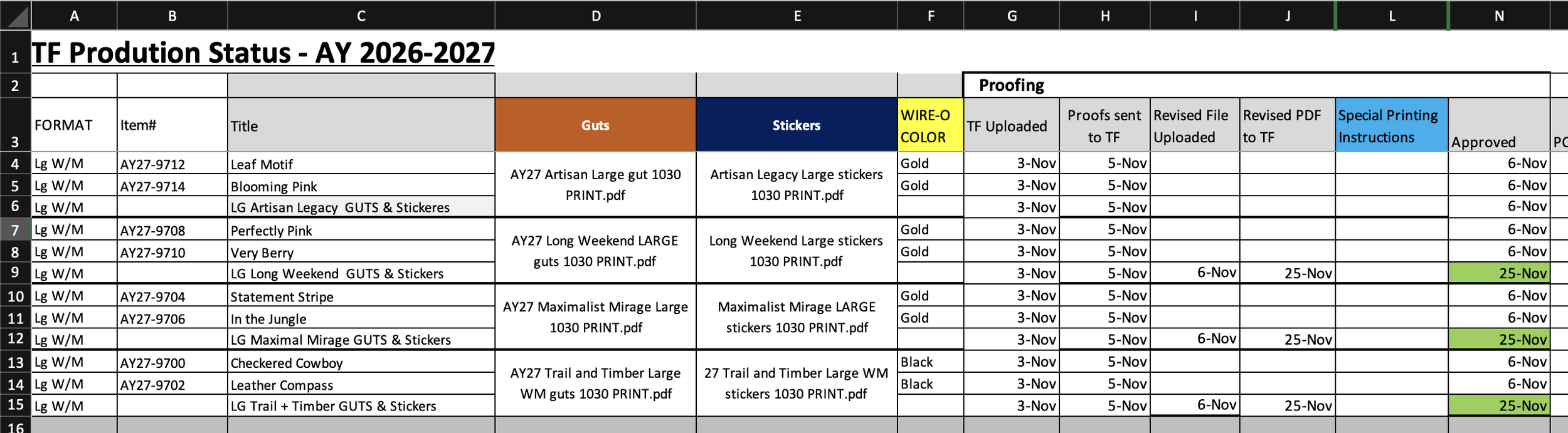
I assigned projects based on designers' strengths while giving them opportunities to choose titles that interested them when possible. Clearly defined timelines, highlighted milestones, and automated reminders helped keep priorities visible and projects moving.
03 — Lead by Example
Stay close to the work while leading the people responsible for it.
In a small creative team, leadership also meant remaining an active contributor. While directing the art team and overseeing hundreds of projects, I continued to carry a substantial design workload alongside my leadership and production responsibilities. Staying hands-on helped meet demanding production schedules while keeping me closely connected to the workflows and challenges the team encountered.
04 — Connect Creative + Sales
Turn creative expertise into tools that help sell the product
Creative's responsibility extended beyond product development. I worked closely with Sales to translate product lines into catalogs, displays, planograms, retailer imagery, ads, and other sales materials—helping buyers quickly understand both individual products and complete retail programs.
Retail Displays
Turning product assortments into compelling retail presentations.
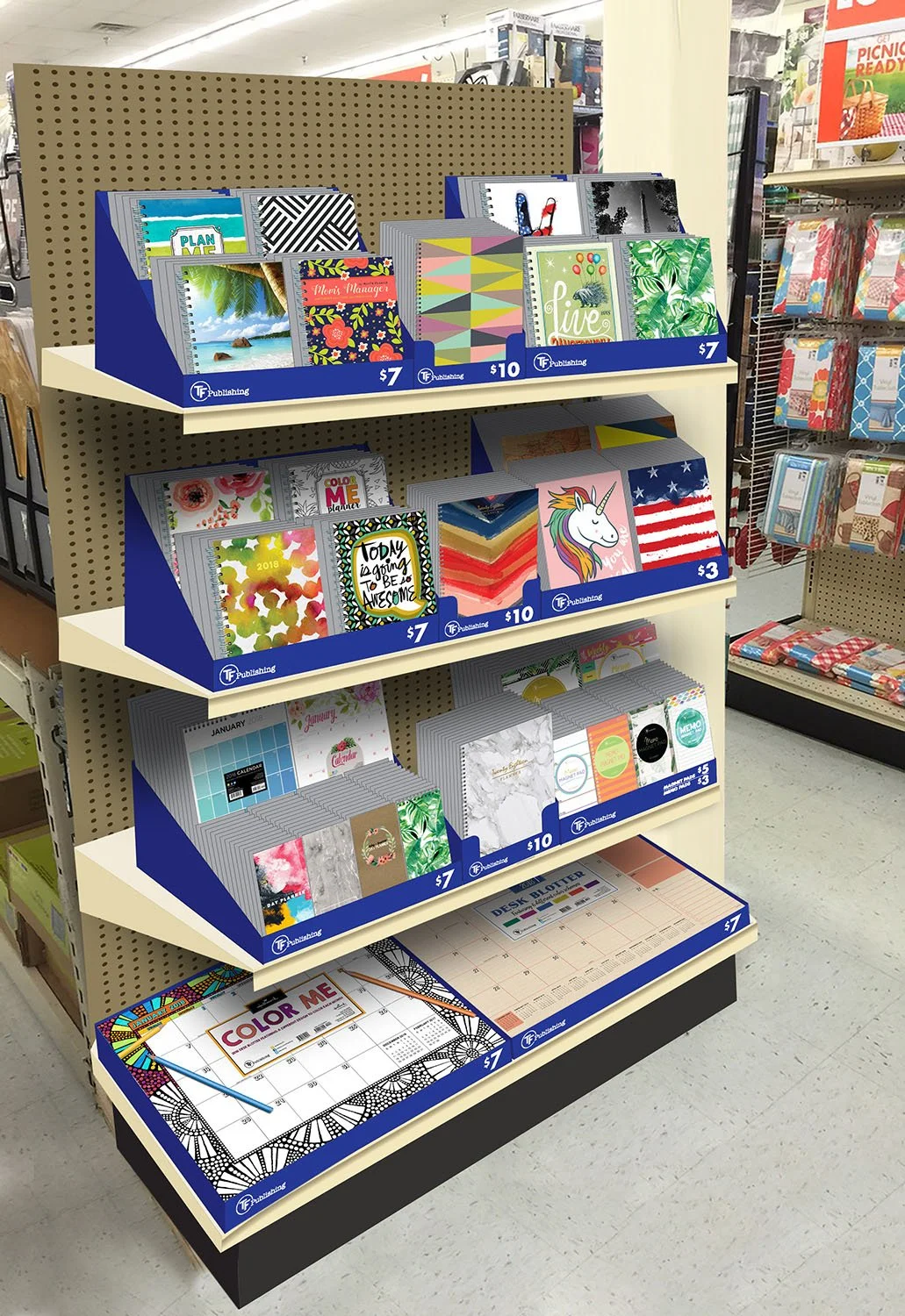
Thinking Beyond the Product
Integrated our collegiate calendars and planners into a broader assortment of licensed merchandise, considering how our products could work alongside items from other suppliers to create a cohesive retail presentation.
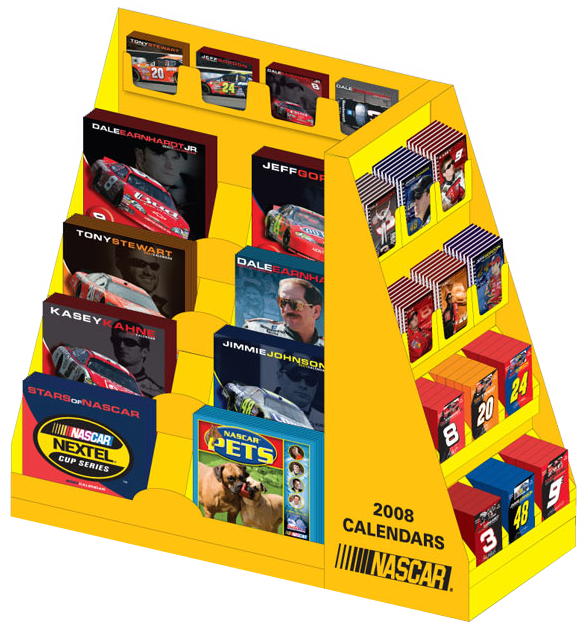
NASCAR Half-Pallet Display, Single-License Mockup
Where the full pallet shows breadth across categories, this composite shows depth within one license — the Maxine line merchandised as a standalone program with its own cohesive shelf presence.
Catalog
Bringing hundreds of products together into one cohesive sales presentation.
I built Calendar Year, Academic Year, and Non-Dated catalogs from the ground up, organizing hundreds of products created by our team into presentations that helped buyers quickly navigate the assortment while maintaining a cohesive visual story.
2020 Calendar Year catalog, 180 pages
Cover to cover, including an assortment of non-dated titles in the back — one confident pitch the whole way through.
Real World Example
Leading Through a Compressed Production Cycle
A year of reduced team capacity, onboarding a new designer, transitioning to remote work, and COVID-era shipping disruptions forced the entire product schedule to accelerate.
I reprioritized workloads, streamlined production processes, simplified selected formats, and concentrated resources on the critical path. Despite the reduced capacity and disruption, the entire product line was completed and approved for print a month earlier than our traditional production schedule.
Team Development
Mentoring and progressive responsibility helped designers grow into greater ownership and independence.
Clear Priorities
Defined expectations, milestones, and ongoing communication kept the team focused on what mattered most.
Creative Ownership
Projects aligned with individual strengths while giving designers room to make decisions and develop their own creative direction.
Cross-Functional Collaboration
Close partnership with Sales and other departments connected creative work to broader business needs.