
PRINT PRODUCTION
Managing complex print production through clear specifications, competitive sourcing, standardized workflows, and quality control.
My approach to print production focused on eliminating ambiguity before it could become a production problem. By standardizing specifications, quoting, file management, proofing, and vendor communication, I created a repeatable process that improved visibility and helped keep products on schedule from initial quote through final shipment.
The Challenge
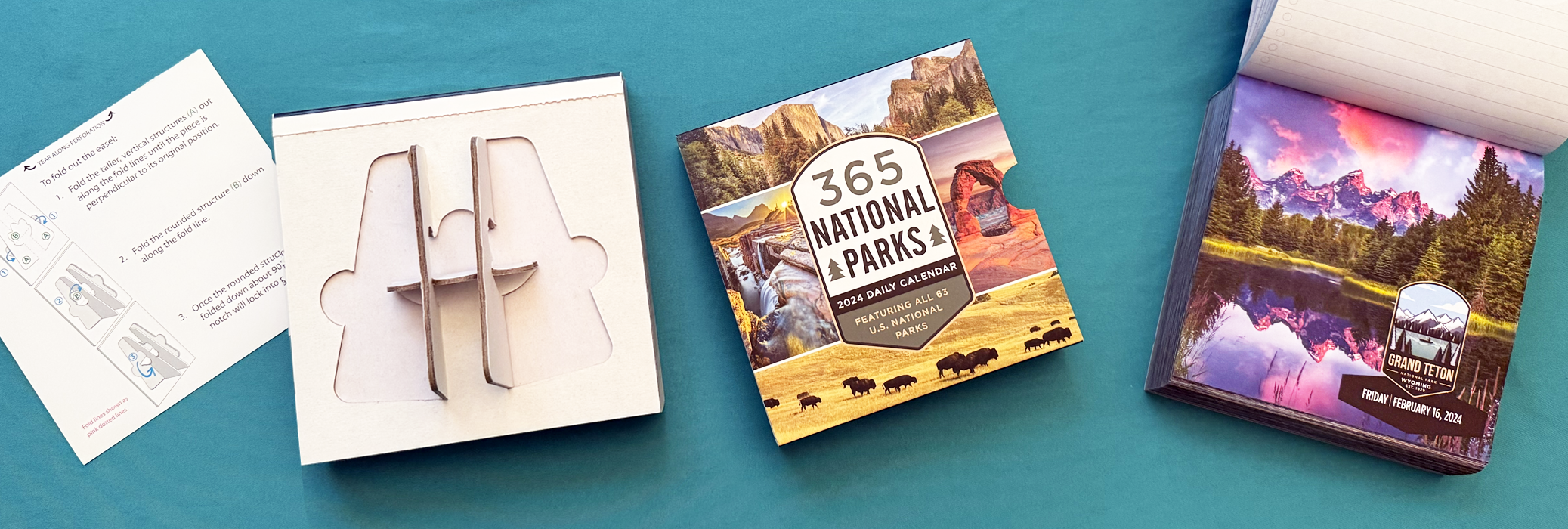
Managing multiple product formats across domestic and international print vendors required consistent specifications, comparable pricing, clear communication, accurate file management, and visibility throughout production.
My Approach
Build clear specifications, compare vendors on equal terms, and maintain visibility from quotation through final print approval.
01 — Specify & Source
Define the product clearly before asking a vendor to manufacture it.
Collaborated across departments to establish product requirements and created detailed specification sheets for each format. Simplified language, diagrams, and example photography helped communicate requirements clearly with international vendors. A standardized quotation spreadsheet ensured printers submitted pricing in a consistent, comparable format.
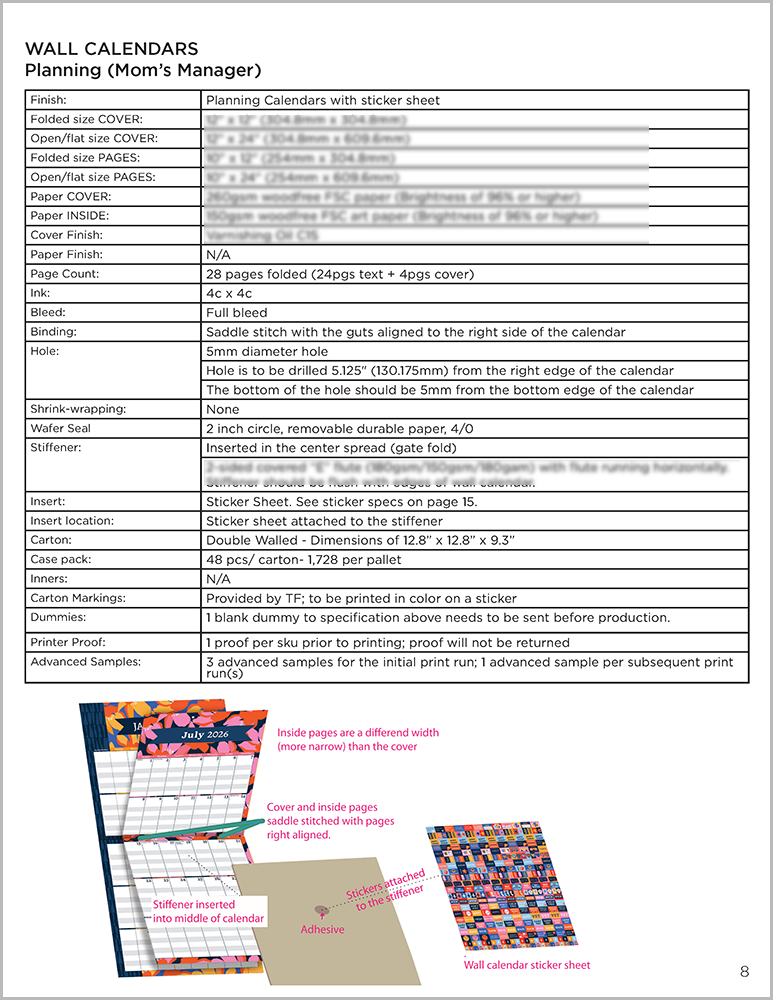
Sample production specification guide developed to clearly communicate construction, materials, finishing, packing, proofing, and quality requirements.
Adapting to Global Freight Disruption
When overseas printers could no longer reliably quote delivered pricing because of volatile container costs, transitioned purchasing from DDP pricing to FOB with freight pass-through. Printers continued coordinating freight and import logistics using their expertise, while actual shipping costs were passed through separately and periodically verified for transparency. As freight conditions stabilized, we returned to DDP pricing, restoring greater cost certainty when evaluating and awarding print programs.
02 — Evaluate & Negotiate
Turn vendor quotations into informed production decisions.
Consolidated printer quotations for side-by-side comparison, evaluated pricing and previous vendor performance, recommended printers by product format, and identified opportunities for negotiation. Final pricing and production requirements were documented and approved by each selected printer before production began.
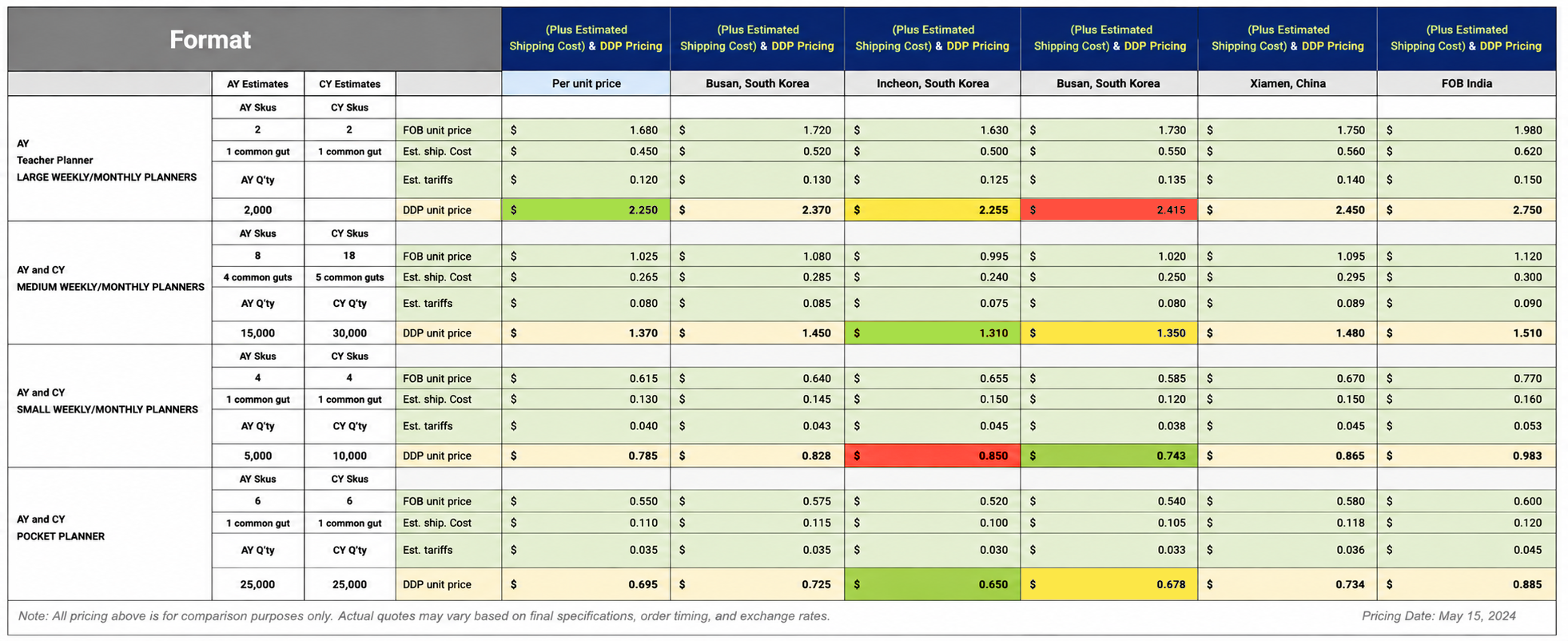
Sample vendor quotation analysis used to compare FOB pricing, estimated freight and tariffs, and total delivered cost across print suppliers. Figures have been altered to protect confidential pricing.
Qualifying New Print Partners
Reduced production risk by testing new commercial printers with lower-run stationery or lower-volume products before awarding larger programs. Evaluated production quality using actual manufactured samples—not simply mockups. For printers with demonstrated experience producing comparable products, larger initial orders could be considered with additional production-sample review.
03 — Track & Approve
Maintain visibility across every product from file submission through final approval.
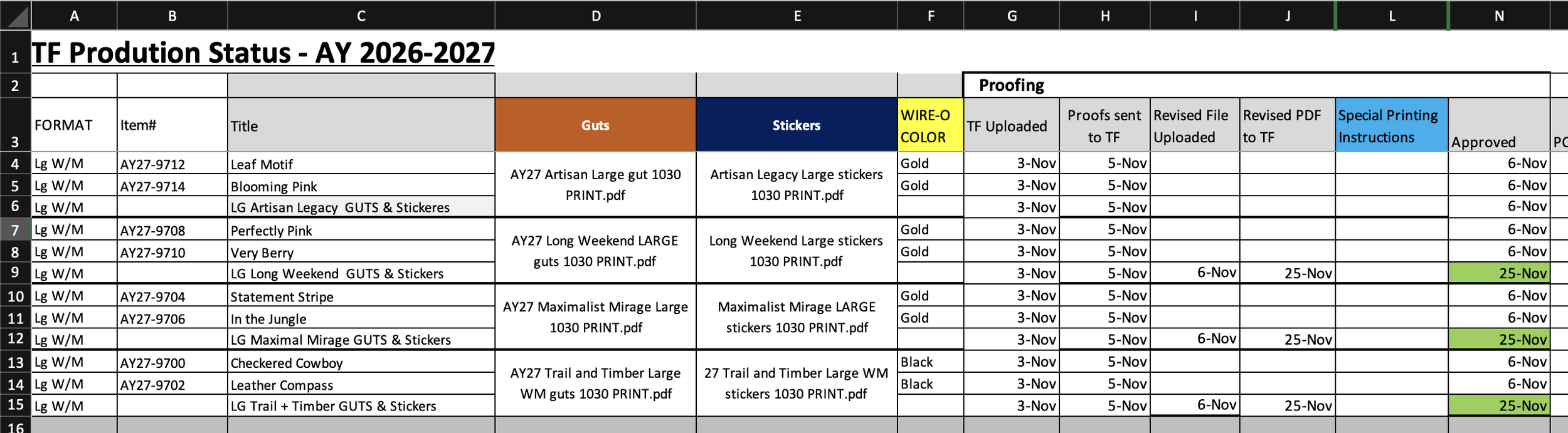
Created shared production status sheets containing product-specific manufacturing details, proofing status, revisions, and approvals. Organized production files by format and used coordinated status updates with printers to maintain visibility throughout production. Designers reviewed proofs using standardized product checklists before advancing work to approval.
04 — Verify & Release
Verify production quality before products enter international shipping.
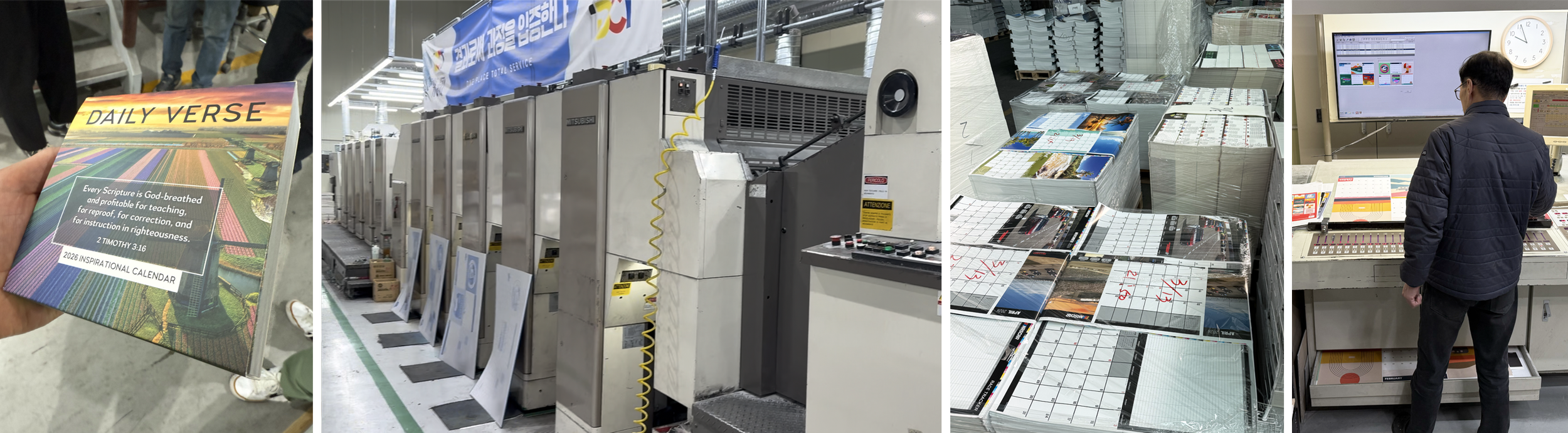
Issued final production approvals and conducted press checks when required. Printers provided finished advance samples pulled directly from the production run for review of printing, color, and overall quality before full orders were released for shipment.
What the Process Accomplished
Clearer vendor communication
Standardized specifications and expectations.
Comparable sourcing
Consistent quotations supported informed vendor decisions.
Production visibility
Shared tracking kept products, proofs, revisions, and approvals visible.
Quality control
Defined checkpoints helped identify issues before final shipment.